

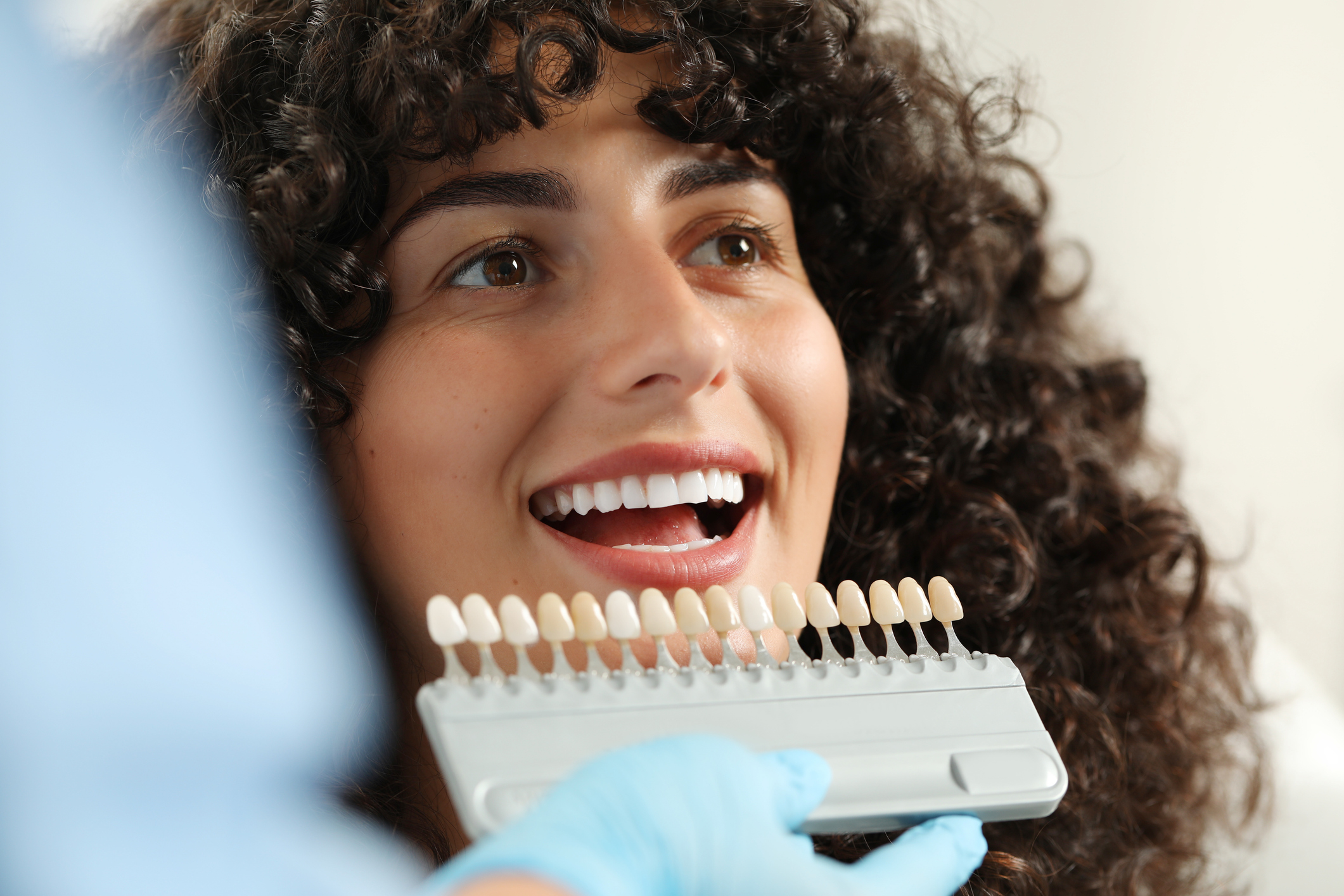
Getting straighter teeth is not a one-size-fits-all proposition, and the right answer depends heavily on what is actually going on with your smile. Dr. Arthur Glosman, Beverly Hills' premier cosmetic dentist with over two decades of experience, works with each patient to determine which path leads to the award-winning smile they came for. Read on to understand the key differences so you can walk into your consultation prepared.
What Porcelain Veneers Can Do for Your Smile
Porcelain veneers are ultra-thin ceramic shells bonded directly to the front surface of your teeth. They work by resurfacing and reshaping teeth rather than moving them, which means the transformation is essentially immediate. The issues veneers address most effectively include:
- Gaps and diastemas between teeth
- Chips or cracks affecting the visible surface
- Mild crowding or slight misalignment
- Staining or discoloration that whitening cannot correct
- Worn-down enamel or an uneven gumline
With proper care, porcelain veneers typically last 10 to 15 years, a lifespan supported by clinical research published through the National Institutes of Health. Dr. Glosman has personally designed and placed more than 30,000 veneers, crafting each set to his exacting standard of sophisticated, natural-looking beauty.
What Invisalign Is Actually Designed to Do
Invisalign is an orthodontic treatment that physically moves teeth using a series of custom-made, clear aligners worn 20 to 22 hours a day. Each set of trays shifts your teeth incrementally, and treatment typically spans 12 to 18 months depending on case complexity.
Invisalign can address crowded teeth, gaps, overbite, underbite, crossbite, and significant rotation, correcting the underlying structure of your bite rather than its surface appearance. The aligners are virtually invisible and removable, with no dietary restrictions, no brackets, and nothing that disrupts a high-profile professional life.
Veneers vs. Invisalign: How to Think About the Decision
Well-aligned teeth with cosmetic concerns around color, shape, or minor spacing are strong candidates for veneers. The result is complete and comes fast. Teeth that need actual repositioning, especially where a bite issue is involved, call for Invisalign first, since correcting the structure creates a more stable foundation for any cosmetic work that follows.
The two are not mutually exclusive. Dr. Glosman's practice is built for full smile makeovers, and he frequently guides patients through plans that combine both.
Are You a Candidate? What Changes the Answer
Veneers require sufficient healthy enamel for bonding, healthy gums, and a solid oral hygiene routine. For Invisalign, the determining factor is the severity of the misalignment; more complex bite corrections can exceed what clear aligners alone can accomplish.
Timeline matters too. Patients with an upcoming event or a tight schedule often find veneers the faster route. Those prioritizing bite health or minimal tooth preparation may find Invisalign a better fit.
Dr. Glosman: Beverly Hills' Smile Architect
With more than 30,000 veneers placed and a career built on transforming smiles for celebrities, royalty, and international clientele, Dr. Glosman offers a level of expertise in both treatments that is genuinely rare. His Beverly Hills studio pairs world-class results with a luxury experience unlike anything you would find at a conventional dental practice. Contact the office today to schedule your consultation.
