

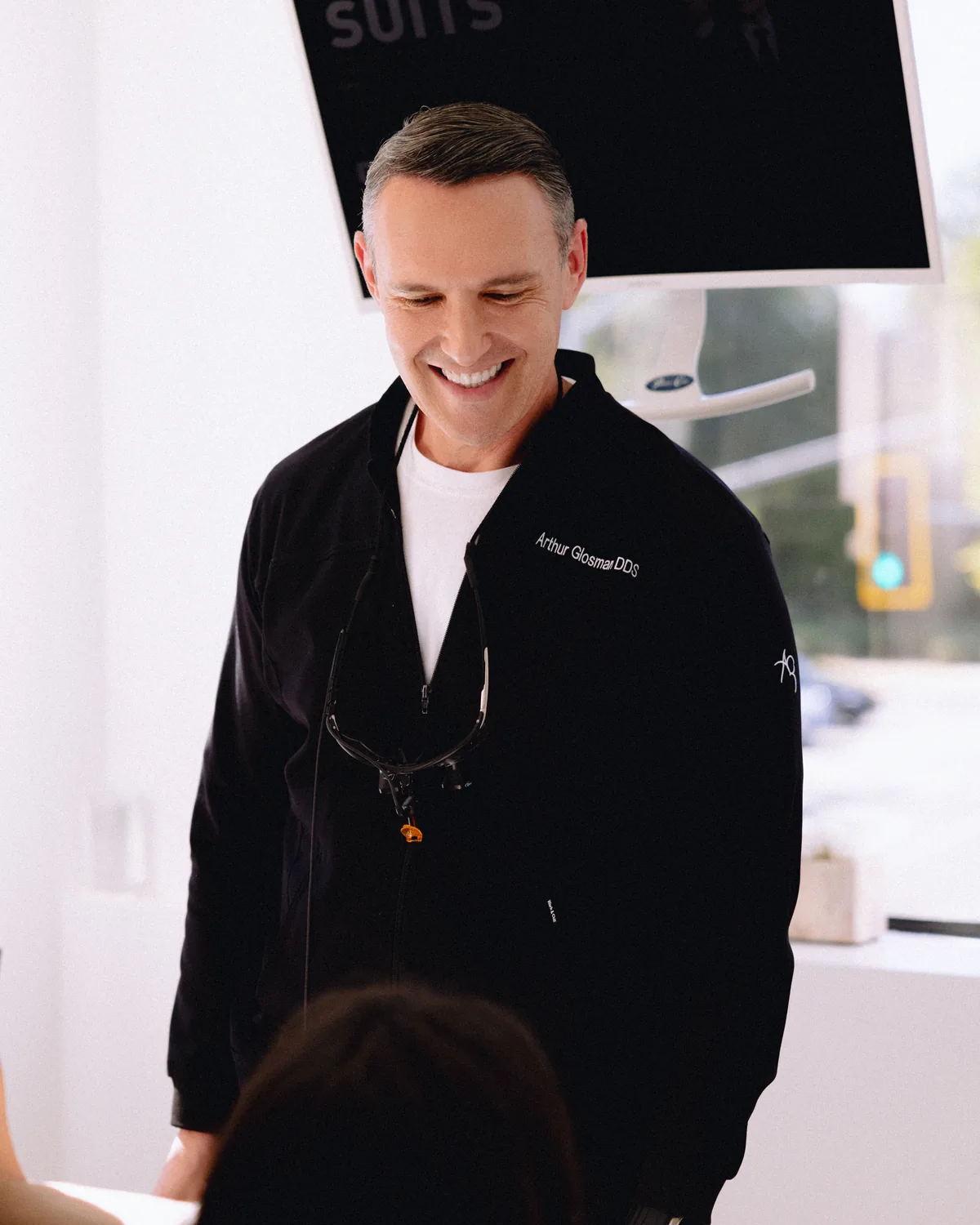
Some tenderness after porcelain veneers is normal. Most people notice mild sensitivity to hot and cold, a slightly sore gumline or a bite that feels a little different for a few days, and it fades as the teeth and gums settle. Pain that is severe, throbbing, getting worse instead of better, or that wakes you at night is not normal and is a reason to call your dentist promptly.
This guide explains why veneers can feel sensitive at first, what you can do at home, and the signs that mean you should be seen.
Why Teeth Can Feel Sensitive After Veneers
A porcelain veneer is a thin shell bonded to the front of a tooth. To make room for it, a small amount of enamel is usually reshaped. Dr. Glosman's approach to porcelain veneers in Beverly Hills uses ultra thin veneers and minimal shaving of the tooth, but even a light preparation can leave the tooth temporarily more aware of temperature.
Common, temporary reasons for discomfort include:
- Temperature sensitivity. The tooth may react to cold drinks or hot coffee for a short time after preparation and bonding.
- Gum tenderness. The gums around the teeth can feel sore after the appointment and while you wear temporary veneers.
- A new bite. Your teeth may meet slightly differently at first. Your brain and jaw muscles need a little time to adjust.
- Jaw fatigue. Holding your mouth open during treatment can leave the jaw muscles tired for a day or two.
The American Dental Association's overview of veneers explains how they are placed, and our article on whether veneers hurt walks through the procedure step by step.
What Normal Recovery Usually Feels Like
Every mouth is different, so your dentist's instructions come first. In general, normal recovery looks like this:
- Mild sensitivity that is noticeable but not sharp, and that improves day by day.
- Gums that feel a little tender and settle within the first days.
- A bite that feels unfamiliar at first and then feels natural.
- No swelling of the face and no fever.
For a closer look at how long temperature sensitivity can last, see our guide to tooth sensitivity after veneers.
Simple Ways to Stay Comfortable at Home
While your teeth adjust, these steps usually help:
- Choose lukewarm food and drinks instead of very hot or very cold ones.
- Eat soft foods for the first days and chew carefully.
- Brush gently with a soft toothbrush and keep flossing.
- Use a toothpaste for sensitive teeth if your dentist recommends one.
- Ask your dentist which over the counter pain reliever is appropriate for you.
- If you grind or clench, ask about a night guard to protect both your veneers and your jaw.

Signs That Pain Is Not Normal
Call your dentist promptly if you notice any of the following:
- Severe or throbbing pain, or pain that keeps you awake at night.
- Pain that gets worse after the first few days instead of easing.
- Lingering pain after hot or cold that lasts long after the drink is gone.
- Pain when biting on one tooth, or a bite that feels high on one side.
- Swelling of the gums or face, a bad taste, or a pimple on the gum.
- A loose, cracked or chipped veneer, or a sharp edge irritating your lip or tongue.
These symptoms can point to a bite that needs a small adjustment, irritation of the nerve inside the tooth, a gum problem or a veneer that is not seated properly. Most of these are straightforward to address when they are caught early.
Pain Under Older Veneers
Pain is not only a new veneer issue. If veneers you have had for years start to hurt, the cause may be decay at the edges, gum recession, a crack or a worn bond. Dr. Glosman's veneer replacement page lists the most common reasons to replace veneers, including chips or cracks from trauma or grinding, veneers that have fallen off or become discolored, discomfort and decay in the natural teeth behind them. If that sounds familiar, learn about veneer replacement in Beverly Hills.
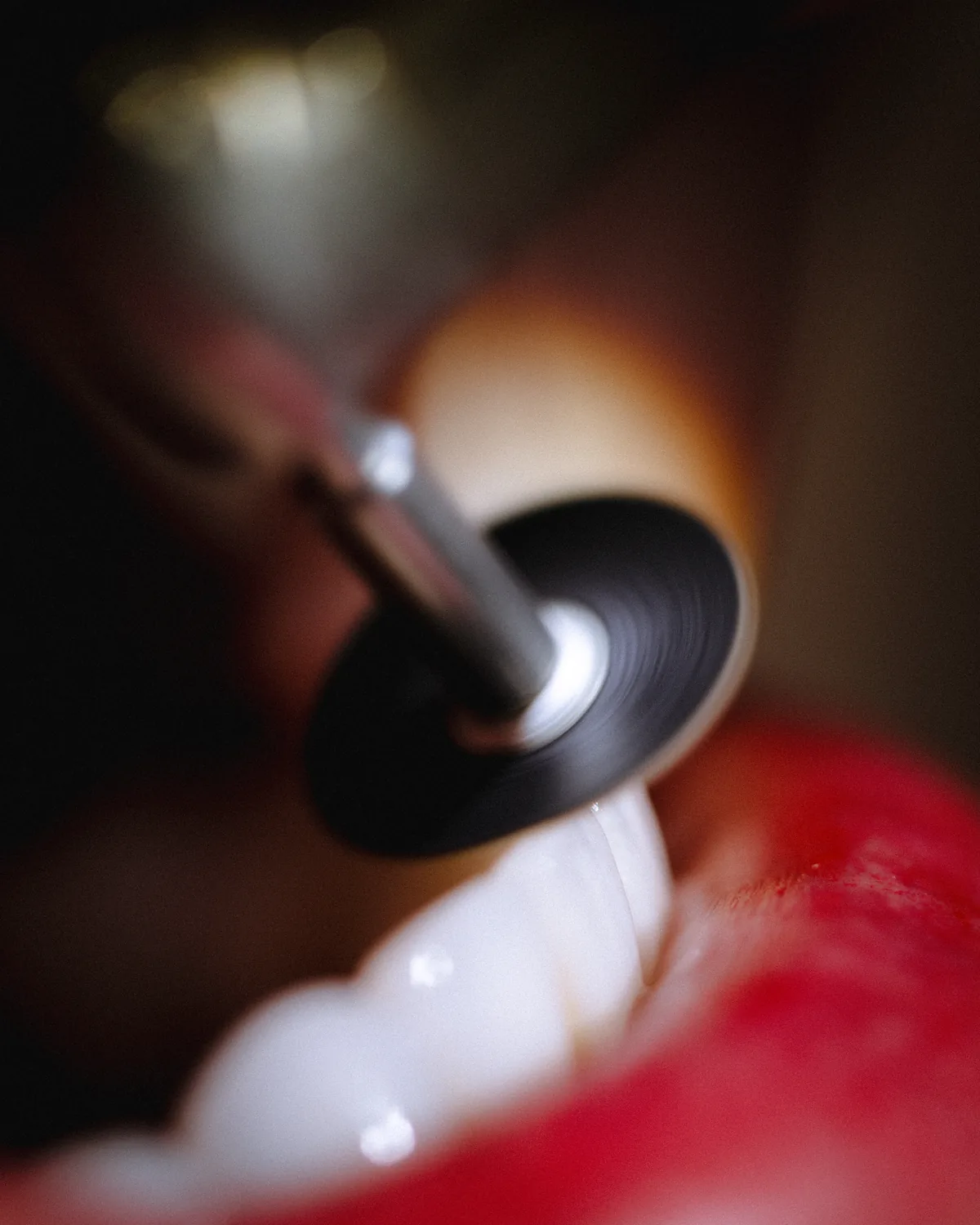
What Happens at a Follow Up Visit
If something hurts, a follow up visit is usually quick and focused. Your dentist will typically:
- Ask when the pain started, what triggers it and whether it is getting better or worse.
- Check your bite with marking paper to see whether one tooth is hitting too hard.
- Look closely at the edges of each veneer and at the gums around them.
- Test how the tooth responds to cold or tapping, and take an X-ray if needed.
A high spot can often be smoothed in minutes. Excess bonding material at the gumline can be removed. If the nerve inside a tooth is irritated, your dentist will explain the next steps and how long to watch it.
Helping Your Veneers Feel and Last Their Best
Once the first days are behind you, good habits keep veneers comfortable for years. Dr. Glosman's veneer replacement page notes that the porcelain veneers he uses can last up to 20 years. To give yours the best chance:
- Brush twice a day and floss daily, paying attention to the gumline.
- Keep regular cleanings and checkups so small issues are caught early.
- Wear a night guard if you grind or clench.
- Do not bite fingernails, ice, pens or packaging.
- Wear a sports mouthguard for contact sports.
When to Call Dr. Glosman
If you had veneers placed at Dr. Glosman's studio and something does not feel right, call the office. A quick check is far better than waiting. If you had veneers done elsewhere and they hurt, look wrong or feel uncomfortable, Dr. Glosman can examine them and explain your options.
Questions about pain after veneers? Call (310) 273-2215 or contact the studio at 450 N Roxbury Dr #222, Beverly Hills.
Frequently Asked Questions
Is it normal to have pain after getting veneers?
Mild sensitivity, gum tenderness and a bite that feels different are common in the first days after veneers and usually fade. Severe, throbbing or worsening pain is not normal and should be checked by your dentist.
How long does sensitivity last after veneers?
For most people, temperature sensitivity improves steadily over the first days and weeks. If sensitivity is getting worse, is sharp, or lingers long after hot or cold, call your dentist.
Why does my tooth hurt when I bite after veneers?
Pain when biting on one tooth often means the bite is slightly high and needs a small adjustment. It can also signal other problems, so it is worth having your dentist take a look.
Can veneers cause gum pain?
The gums can feel tender after treatment and while wearing temporaries. Ongoing gum pain, swelling or bleeding around a veneer should be examined, because the edges of the veneer and the gum health both matter for long term results.
What should I do if a veneer feels loose or chips?
Avoid chewing on that tooth, keep any pieces, and call the office. Do not try to glue a veneer back on yourself.
Can Dr. Glosman help with veneers done by another dentist?
Yes. Dr. Glosman can examine veneers placed elsewhere and explain whether they can be adjusted, repaired or replaced. Call (310) 273-2215 to book a visit.
About Dr. Arthur Glosman
Dr. Arthur Glosman is a cosmetic and restorative dentist who has practiced since 1999. He earned his DDS from the University of Southern California School of Dentistry and trained at the Las Vegas Institute for Advanced Dental Studies. His studio is at 450 N Roxbury Dr #222, Beverly Hills, CA 90210. Call (310) 273-2215 or request a consultation.
Sources
This article is for general education and does not replace an exam and advice from a licensed dentist. Treatment options, timing and results vary from person to person.
